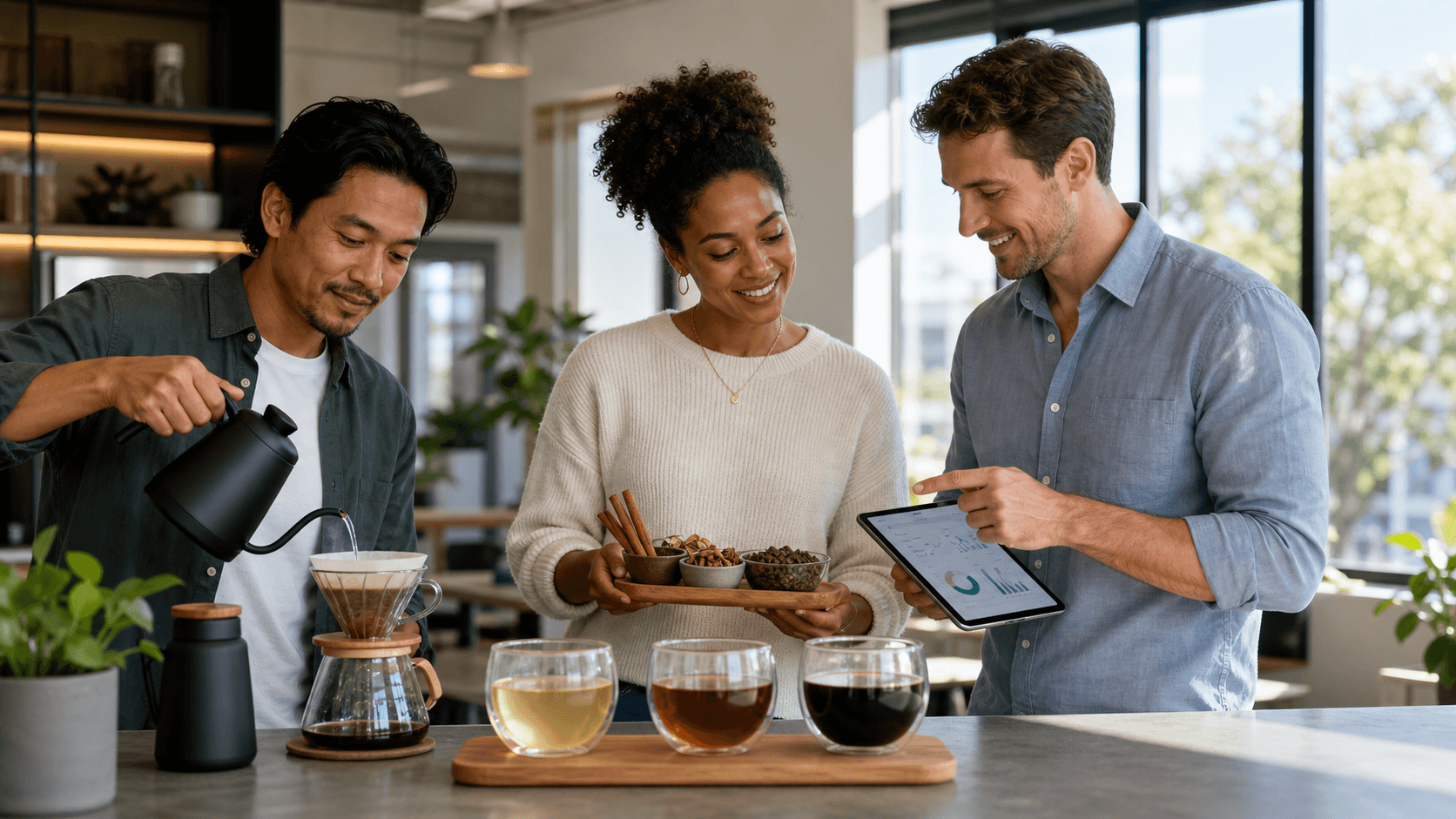
Healthy Coffee Claims Under the Microscope
Healthy coffee is on everything right now. Bags scream clean, smart, detox, keto, immune. Drinks promise focus, fat burning, and glowing skin from one cup. It sounds nice, but it can also feel confusing when all you want is a cup that gives you a clear lift without upsetting your routine.
We roast and drink a lot of coffee, and we care about how it actually fits into a real day. So we are putting the buzzwords under the microscope. We will walk through what healthy coffee can reasonably mean, how to read labels like a skeptic, what functional ingredients can and cannot do, and how to pick a daily cup that earns the word healthy by what is inside the bag, not the hype on the front.
What Healthy Coffee Really Means
When we strip away marketing, healthy coffee starts with basics, not big promises. The things that actually change your experience in the cup are simple:
- Bean quality
- Roast level
- Freshness
- How your own body handles caffeine
Good beans that are roasted with care tend to taste smoother. Fresher coffee keeps more of its natural oils and aromatics, which can change how it feels to drink. Caffeine itself is not good or bad, it just affects people differently. Some of us do best with one small cup, some of us are fine with more.
Here is what healthy coffee does not mean. It will not fix bad sleep. It will not erase stress. It will not replace real food. One drink cannot do all that. What it can do is fit into your day without asking the impossible.
So we like a grounded definition. Healthy coffee means:
- Minimal junk ingredients and fake sweetness
- High quality beans that you actually enjoy drinking almost black
- Thoughtful add-ons like mushrooms and adaptogens, framed as flavor and functional extras, not magic solutions
Reading Coffee Labels Like a Skeptic
Front-of-bag claims are built to grab your eye during a busy morning shop or scroll. Here is what some common ones usually signal:
- Organic: beans were grown without certain synthetic chemicals, but it does not promise good flavor by itself.
- Single origin: beans from one region or farm, which can mean more traceable flavor and quality.
- Fair trade: focus on better treatment and pay for farmers, though standards can vary.
- Specialty: often means higher grade Arabica with fewer defects and more cared-for flavor.
- Low acid: usually about perceived taste and comfort, not zero acid.
- Mushroom coffee: coffee combined with some form of mushroom powder or extract, but the dose and quality can be very different from bag to bag.
Red flags when you are aiming for a straightforward daily habit:
- Long lists of sweeteners, creamers, gums, and stabilizers
- Vague natural flavors with no other detail
- Proprietary blends that tell you everything and nothing at the same time
Flip the bag. The back tells you more than the front. Look for:
- Short ingredient lists you can pronounce
- Whole beans rather than only pre-ground
- Any sourcing notes or origin details
- A clear roast date instead of just a best-by date
- Grind type that matches how you brew
These quiet details matter more than the loud promises.
Functional Ingredients Without the Fairy Dust
Functional coffee usually means regular coffee plus extra ingredients. The common ones:
- Mushrooms like lion's mane, chaga, reishi, cordyceps
- Adaptogens like ashwagandha or rhodiola
We see these as support players, not the star of the show. They can be part of a routine you enjoy, but they do not replace rest, food, or how you handle stress.
When you see mushroom or adaptogen coffee, a few terms can help you gauge what you are looking at:
- Standardized extracts: aim for a consistent amount of key compounds from batch to batch.
- Fruiting body: points to the main part of the mushroom above ground, instead of just mycelium.
- Beta-glucans: natural fibers in mushrooms that are often used as a quality marker.
The big problem with many so-called functional coffees is simple:
- Tiny amounts of the "hero" ingredient just for the label
- Lots of sugar, cream powders, and flavors to cover up harsh coffee
- Stale pre-ground blends that taste flat and lean on add-ins to distract from it
If the ingredient list reads like dessert, that health angle is already fading.
Specialty Coffee, Origins, and the Taste of Place
Healthy coffee is not only about what it does in your body, it is also about how it tastes in your daily ritual. That is where specialty coffee culture comes in. Higher grade Arabica, traceable origins, and careful roasting are not just snobby details. They change the full experience in the cup.
Different regions offer different flavor profiles, especially if you drink your coffee black or with just a splash of something:
- Latin America: often chocolatey, nutty, and comforting
- Africa: can be bright, fruity, and floral
- Asia: sometimes deeper, earthy, and spicy
Roast levels matter too:
- Light: brighter, more complex, often perceived as a bit more intense by some people
- Medium: balanced, sweet, strong enough for iced coffee in hot weather
- Dark: bold and smoky, but if roasted too far, it can taste bitter and heavy
When the heat kicks in and mornings start earlier, a cleaner medium roast iced coffee can feel more refreshing than a heavy, syrupy drink labeled as diet friendly.
Fresh Grinding and Morning Rituals That Work
Here is the simple science behind a better-tasting cup. Once coffee is ground, air hits the tiny particles. Aromas fade fast. Oils break down. The result is flatter flavor and a rougher edge in the cup. A lot of pre-ground functional blends lean on strong flavorings to hide that dull taste.
Grinding right before you brew keeps more aromatics alive. Fresh grounds smell bigger and often taste sweeter, which can make the coffee seem smoother even without cream or sugar. That alone can make a cup feel more "balanced" because you are not fighting bitterness or masking flavor with extras.
Grinding whole-bean coffee together with whole or tablet-style functional ingredients keeps things closer to their natural state. You taste the coffee first, not a wall of flavoring, and the support ingredients are not sitting pre-ground for months in a bag.
All of this matters in real life: early sun, hot walks, kids out of school, travel days, late nights. A simple, steady coffee ritual can be one solid piece of a shifting schedule. Instead of chasing the newest detox label, we can:
- Get some consistent sleep when we can
- Drink water before and after coffee
- Move a bit in the morning
- Keep coffee clean, fresh, and enjoyable
Small tweaks help too, like dialing in your grind size, choosing a brew method that fits your time, swapping sugary mixes for better beans, and timing caffeine so it fits your day instead of overrunning your night.
At Bywaqa, we built our whole-bean mushroom coffee and tablet pairing around these ideas: specialty Arabica, functional ingredients that respect the coffee, and a grind-fresh ritual that sticks to what is in the bag instead of riding on buzzwords. When we read labels now, we ignore the loudest words on the front and go straight to the ingredients, the roast date, and whether we would actually want to drink that cup almost black on a warm summer morning.
Discover How Healthy Coffee Can Elevate Your Daily Routine
Experience how our thoughtfully crafted blends can turn your daily cup into a small choice that supports your overall well-being. Explore our healthy coffee options to find a roast that matches your taste and lifestyle. If you have questions about ingredients, sourcing, or which blend is right for you, feel free to contact us so we can help you get started. At Bywaqa, we are committed to making your coffee break a healthier, more fulfilling part of your day.